
Hay Day
SupercellCasual
4.4415.32K Reviews
- Version
- 1.72.86
- Installs
- 100.00M
- Age Rating
- Everyone
Screenshots
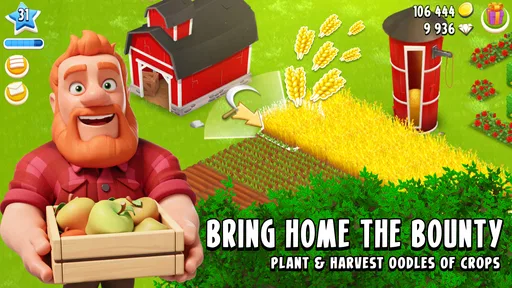
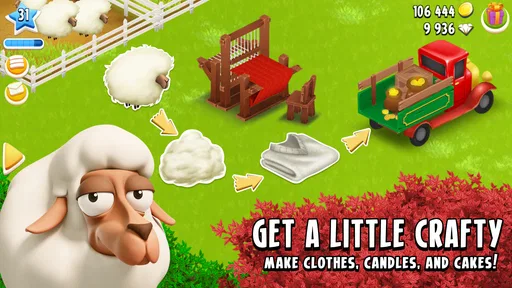
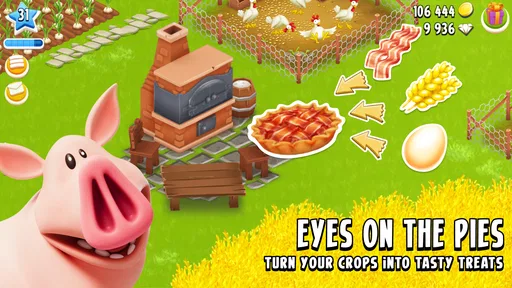
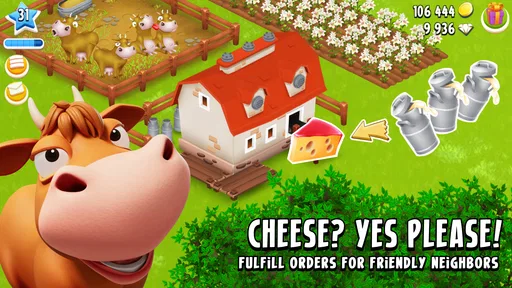
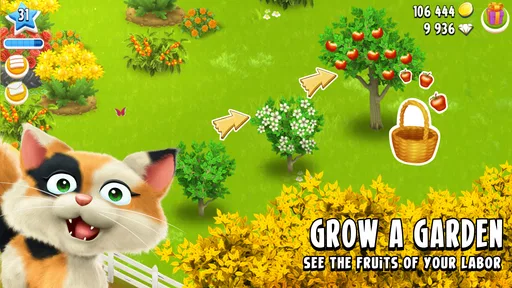
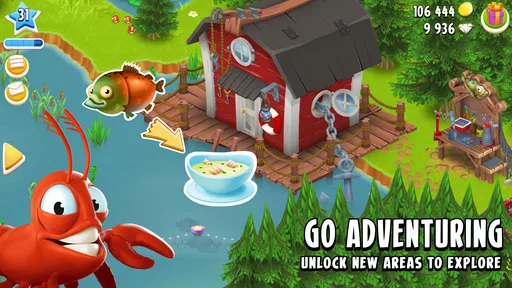
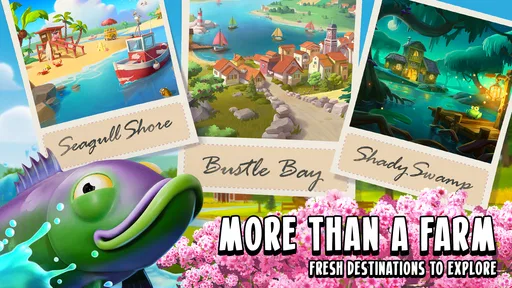
Our Review of Hay Day
 Analysis by Appyee
I like Hay Day most when I treat it as a farm to tend in short visits rather than a checklist to clear in one sitting. A quick harvest, a look at what is ready to produce, and a decision about what to sell can make a small break feel rewarding. Developed by Supercell, this free casual game has a relaxed, colorful style, but its best moments come from making sensible choices with limited time and space.
A routine that works around real life
My most useful habit is to check the farm in a consistent order: collect finished goods, restart production, plant crops that will be ready before my next likely visit, then decide whether an order is worth fulfilling. That last choice matters. An order board can make every request look like progress, but accepting one without checking the ingredients may tie up goods I would rather sell or use elsewhere. I get more out of the game when I choose a small goal for each visit instead of trying to do everything.
For example, if I have only a few minutes while waiting for a meal to cook, I can harvest ready crops and restart a production queue without needing to complete a long task. Before leaving the game, I can plant something that suits the time until I return. This simple timing habit reduces idle gaps and makes the farm feel productive without turning it into an obligation. It is also a good reason to avoid planting only the crop that happens to be needed for the latest order.
Small choices that prevent bottlenecks
Storage is part of the strategy, not just a place to put the results of harvesting. When I keep every item “just in case,” the farm can become harder to manage because there is less room for the next batch. I try to notice which goods are piling up and sell some of them before starting another round. Keeping a modest reserve of useful ingredients can help, but hoarding everything often slows the very production I want to expand.
I also think about the whole chain before committing ingredients. A finished product may require goods that have their own production time, so an order that appears simple can occupy several parts of the farm. If I am short on time, selling a ready-made surplus through the roadside shop can be more comfortable than starting a chain I will not finish soon. These are small decisions, but they make the game feel less like waiting and more like planning.
Social play without pressure
Trading and visiting other players can make the farm feel less solitary, but I do not think the social side has to dominate the experience. I enjoy it most when I have a clear reason to connect: finding a useful item, sharing a surplus, or seeing how someone else has arranged a farm. If I prefer a quiet session, I can focus on my own crops and production instead. The social layer is a welcome option rather than the only reason to play.
That balance makes the game a good fit for people who like gentle progress and occasional interaction. It is less suitable if you want a competitive match with a clear winner, a story that drives every session, or action that demands constant attention. Compared with faster casual games built around quick rounds, this farm asks you to come back to processes that take time. Compared with other management-style games, its appeal is the approachable combination of crops, animals, production, trading, and decoration rather than a detailed simulation of real agriculture.
Who should give it a try
I would recommend it to someone who enjoys organizing a small set of tasks, checking in briefly during the day, and seeing a place gradually fill out. It can also suit friends who like trading without needing every session to be a coordinated group activity. If you tend to enjoy decorating, the farm gives you a personal space to shape alongside the practical work. On the other hand, players who dislike timers, repeated production steps, or the temptation to speed things up with purchases may find the pace frustrating.
The game is free to download and rated for Everyone. Its current version is 1.69.84, and it requires Android 7.0 or later on Android devices. Optional in-app purchases range from $0.29 to $239.99 per item, so I would approach spending with a plan: decide whether a purchase is genuinely worth it to you before tapping, rather than treating a wait as a problem that must be paid away. Patience is a workable way to play, but the option to spend is part of the experience.
Hay Day has been available since November 13, 2013, and its reach is easy to understand: it has passed 100 million installs, with an average rating of 4.3 from around 13 million ratings and roughly 419,000 written reviews. Those figures point to a long-running audience, but they do not change the practical question: do you enjoy this kind of slow, incremental routine? If you do, there is plenty to organize; if you need a game that feels complete after one short session, this is not the one I would choose.
Welcome to Your Farm Paradise
Upon firing up Hay Day, you’re immediately transported to a vibrant, colorful world where farming is more fun than you ever imagined. The game kicks off with a friendly scarecrow guiding you through the basics. This tutorial is spot-on, perfect for newbies like me who might otherwise feel overwhelmed by the plethora of options.
The graphics are a treat for the eyes. Every little detail, from the swaying cornfields to the bustling roadside shop, is crafted with care. It’s like stepping into a cartoon world where everything is alive and interactive. You can plant crops, raise animals, and even trade with other players. It’s a busy little ecosystem, and you’re at the heart of it all.
Harvest, Build, Trade
The core of the game revolves around a simple yet addictive loop: plant, harvest, and sell. But don’t let the simplicity fool you. Hay Day is all about strategy, planning, and a dash of creativity.
There’s a wide variety of crops and animals to manage. Whether you’re growing wheat or feeding chickens, everything you do contributes to your farm’s growth. After harvesting, you can sell your goods at the roadside shop or fulfill orders from the order board, which keeps the game dynamic and engaging.
And then there’s the trading! Connecting with friends and other players adds a social twist that’s both challenging and rewarding. You can trade items you need or sell excess produce, creating a thriving marketplace. The community aspect is a big win, making the game feel lively and connected.
Building a Farming Empire
As you progress, the game introduces more complex elements like crafting factories and production buildings. Want to bake bread or make cheese? You got it! It’s an ever-expanding universe, and you’re constantly unlocking new recipes and items.
Customization is another fun aspect. Decorating your farm with various items lets you express your personality. Whether it’s a rustic charm or a modern look, the choice is yours. It’s these little touches that keep you invested in your farm, turning it from a simple plot of land into a bustling paradise.
Settings, shortcuts, and repeatable habits
I would not call Hay Day a game that needs a complicated setup routine. The useful “settings” are mostly choices I make for myself: when to check in, what I want to produce, and how much of my attention I want to give the farm. I keep notifications in mind as a personal convenience rather than a requirement. If reminders interrupt your day, you can play by opening the game when it suits you; the farm’s appeal does not depend on responding instantly.
A practical shortcut is to make each visit end with the next visit in mind. I avoid leaving several production steps half-planned: I gather what is ready, queue a sensible next batch, and plant crops with a realistic return time. This does not remove waiting, but it means waiting happens while I am doing something else. The trade-off is that a tightly planned queue can feel less spontaneous, so I leave room to change direction when a useful sale or a new goal catches my eye.
Another helpful pattern is to separate “farm maintenance” from “farm projects.” Maintenance is the quick harvest-and-restart loop; a project is saving ingredients or working toward a particular building, product, or expansion. When I mix the two without a plan, I can spend a whole visit moving items around and still feel no closer to anything. Giving a longer goal its own place in my thinking makes everyday sessions clearer, even if progress remains gradual.
Where patience helps—and where it does not
The slow pace is the game’s defining trade-off. It gives me a reason to return, and it makes completed goods feel earned, but it also means Hay Day is not ideal when I want a self-contained burst of play with a definite ending. Production chains can ask for advance planning, and a limited supply of ingredients can make one choice compete with another. If I have a spare moment and want immediate action, a puzzle or arcade game is a better fit; if I want a calm project to revisit, this farm is more satisfying.
I also would not approach it as a realistic farming simulator. Its pleasure comes from a friendly, simplified economy and the rhythm of managing crops, animals, products, orders, and a shop. Players who want detailed agricultural decisions or a strong narrative may find that the farm’s light management is not enough. Likewise, anyone who dislikes games that encourage optional spending should decide early how they feel about purchases; the game can be played without paying, but convenience purchases remain visible as a faster route through some waits.
Choosing a goal without letting the board choose for you
When I return after a longer break, I do not try to catch up on every possible task. I first see what is already ready, then choose one priority: restock the shop, work toward an order, or keep production moving. That prevents the order board from turning into a source of pressure. An order is useful when its requirements line up with what I already have; it is a poor fit when it empties the ingredients I need for a more important chain.
This approach is especially handy for a casual player who does not want the game to dictate a schedule. A short session can still have a satisfying endpoint: harvest, sell a surplus, and set up the next batch. Someone who wants to optimize every resource may prefer more deliberate planning, while a relaxed player can accept slower growth and focus on the parts they find charming. Neither style is wrong; the game gives more room to enjoy it when I decide what “progress” means for that visit.
In-App Purchases and Monetization
Now, let’s talk about the elephant in the room: in-app purchases. Hay Day is free to play, but like most mobile games, it offers in-app purchases. While you can certainly progress without spending a dime, buying diamonds can speed up processes and unlock items faster.
But don’t worry if you’re a free-to-play enthusiast. The game is generous with rewards, and patience is genuinely rewarded. The sense of achievement when you finally unlock a new area or complete a big order is incredibly satisfying without spending real money.
A farm for the right kind of break
For me, the strongest reason to recommend Hay Day is not that it keeps me busy every minute, but that it gives a small routine some personality. I can make a brief visit productive, or spend longer arranging the farm and deciding what to sell. The friendly visuals and mix of practical management with decoration give it more warmth than a bare timer-based task list.
Its large community is another reason it can feel lively: the game has over 100 million installs, and Supercell’s casual farming game has maintained a substantial audience. Still, popularity is not a guarantee that its rhythm will suit everyone. I would choose it for relaxed, ongoing progress and optional trading, not for a demanding competitive challenge or a story-heavy adventure.
The Verdict
So, what’s the final word on Hay Day? It’s a charming, engaging, and thoroughly enjoyable farming game that offers something for everyone. Whether you’re a casual player looking to kill some time or a dedicated fan ready to dive deep into farm management, this game has got you covered.
With its beautiful graphics, strategic gameplay, and a friendly community, it’s no wonder Hay Day remains a top choice for players around the globe. So, grab your virtual overalls, and happy farming!
Verdict
Strengths of Hay Day
- Engaging and addictive gameplay loop.
- Vibrant graphics and charming animations.
- Regular updates with new content.
- Easy to learn for all age groups.
- Strong community and social features.
Limitations of Hay Day
- Requires constant internet connection.
- Progress can be slow without in-app purchases.
- Limited offline play options.
- Some tasks become repetitive over time.
- Notifications can be overly frequent.
Other Releases by Supercell
View All
Brawl Stars
Action4.2

Clash of Clans
Strategy4.5

Clash Royale
Strategy4.4

Boom Beach: War Strategy Game
Strategy4.4
Similar Picks in This Category
View All
My Talking Angela
Outfit7 Limited4.2

My Talking Tom
Outfit7 Limited4.3

Pou
Zakeh4.2

My Talking Tom 2: Pet Game
Outfit7 Limited4.3

Candy Crush Saga
King4.6

Bridge Race
Supersonic Studios LTD4.1
Frequently Asked Questions
What is Hay Day and what makes it unique among farming games?
Hay Day is a popular farming simulation game that offers a vibrant, engaging experience where players manage a farm, grow crops, and trade goods. Unlike many other farming games, Hay Day features a rich, immersive environment with charming graphics and a well-balanced economy system that encourages strategic trading and community interaction.
Can I play Hay Day offline, or is an internet connection required?
Hay Day requires an internet connection to play. The game is designed to be interactive, allowing players to trade with others and participate in events. The online connection ensures that all features, including community trading and real-time updates, function smoothly, providing a seamless gaming experience.
What are the primary features of Hay Day that enhance gameplay?
Hay Day offers a range of features that enhance gameplay, including crop growing, animal husbandry, production buildings, and trading with neighbors. Players can also customize their farms, engage in social activities through neighborhood groups, and participate in seasonal events and challenges that keep the game fresh and exciting.
Are there any in-app purchases in Hay Day, and are they necessary to progress?
Hay Day includes in-app purchases that allow players to buy diamonds and other resources to speed up progress. However, these purchases are optional. The game is designed to be enjoyable without spending money, as players can earn resources through farming activities, trading, and completing tasks.
How does the social aspect of Hay Day influence the overall experience?
The social aspect of Hay Day is a significant component, enhancing the overall experience by fostering community interaction. Players can join neighborhoods, trade goods, and help each other with tasks. This cooperative gameplay not only adds depth to the game but also creates a vibrant community atmosphere that encourages collaborative strategies and friendships.
Play our best games!


